The internet is getting more dynamic than ever.
Twenty years ago, the web was just like an electronic paper. All you could do was to read.
Then, internet got faster -- images started to appear on the web.
10 years ago, we get the ECMAScript, or more commonly recognised as JavaScript. It allowed us to interact with webpages, making modern dynamic sites like Gmail and Meebo possible.
Today, we get CSS3 Transitions.
What does it do? Basically, it allows simple animations with shockingly few lines of codes. For Google Chrome, Apple Safari or Opera users, hover your cursor over any of my links (including the semi-transparent image links below the cbox). You should see the links slowly changing colour instead of snapping instantly, like lightning.
Well, how about Mozilla Firefox and Windows Internet Explorer users? For Firefox users, upgrade to Firefox 4.0 or later to enjoy this feature. Version 4.0 is available as a beta version at http://www.mozilla.com/en-US/firefox/beta/ as of now. It's really worth a try, especially if you're a Windows user.
As for IE users, well, maybe it's time to switch.
See http://hacks.mozilla.org/2010/07/firefox4-beta2/ for another CSS3 Transition sample.

Friday, 6 August 2010

Thursday, 29 July 2010
Sights of London: Baker Street
Note: High resolution images of all of the following photos are available. Click on the photos to view their higher resolution images.
I grew up loving English classics and Sherlock Holmes is definitely one of my all-time favourites. Naturally, one of the places on top of my "to-visit-in-London list" was Baker Street.

The home of Sherlock Holmes was said to be 221b Baker Street. However, according to Wikipedia, Number 221 never actually existed during the famous detective's time. Back then, Baker Street only went up to about 100. When Number-Two-Twenty-One actually came into existence, it was made into a Sherlock Holmes museum and has been attracting visitors from all over the world ever since.

Getting to Baker Street was a piece of cake (no pun intended) -- there's a Tube station (also called Baker Street) at its mouth. For your information, Baker Street is within London Underground Zone 1, so a ride from central London should cost £1.80.
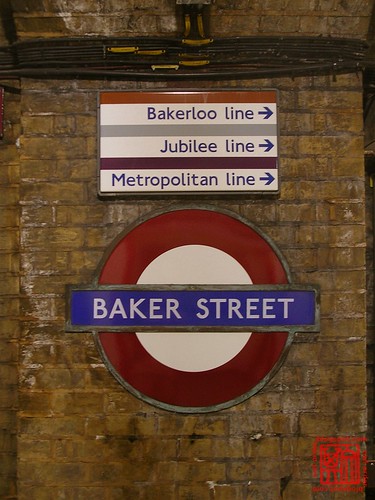
Above ground, you'll be greeted with signboards.

Madam Tussauds' wax museum is also not far away.
Once on Baker Street, just look for 221.
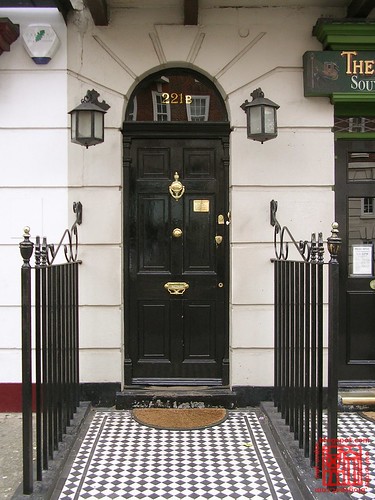
Well, actually I still managed to lose my way that day. For 15 minutes or so.
Anyway, after a while, I immediately knew I was at the right place. Sherlock Holmes's silhouette began to appear literally everywhere. Cafés, bars, dry cleaners, restaurants, all sported the side profile with a pipe.

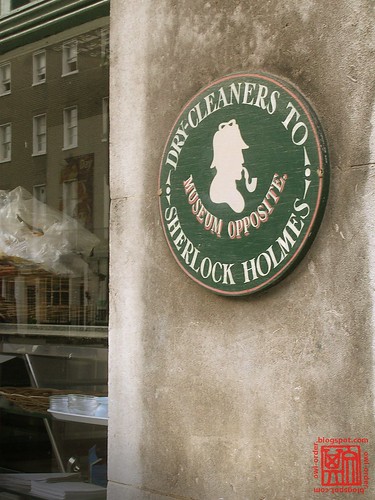
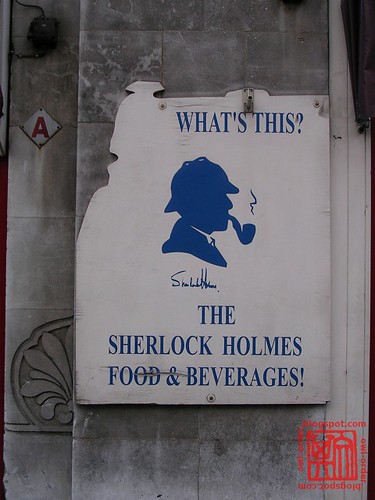
221 itself was unsuspecting. Other than the rather distracting Museum signboard, everything looked perfectly ordinary. It was as if Sherlock Holmes was still alive and was living among the ordinary, not yet becoming a legend.
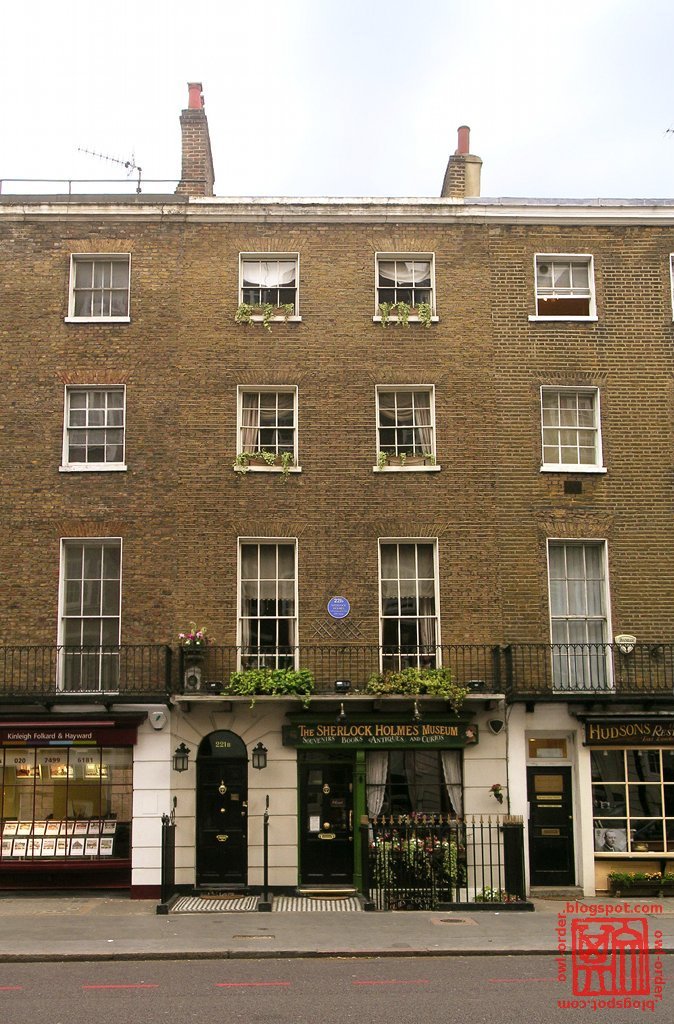
I was a little less fortunate that day. It was a Saturday evening and the museum was closed.
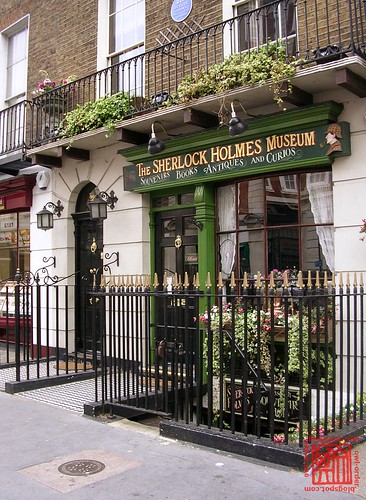
Yet I was still satisfied to be able to knock on the door of the world's most famous detective.

A mock-up of a police notice, asking Sherlock Holmes for help on solving a seemingly complicated murder case.

A pose beside Baker Street Underground station's escalator. Took me multiple tries to get this right -- hundreds of people went pass me and gave me different kinds of looks.
What an honour.
Monday, 26 July 2010
Owl Order is Still Alive
Sorry for being missing in action for such a long time without anything as much as a notice, but I promise, I'll be back.
Stay tuned.
Stay tuned.
Subscribe to:
Posts (Atom)


